

Examinations are an integral part of a student’s life and it need not be a nightmare. If you’ve ever had your heart race early on in a test, become sweaty during studying, or go blank during an exam, you’re not alone. It’s normal to get stressed over exams, and millions of students experience the same pressure. The good news? You can be trained to manage it, and you also can be trained to overcome it.
In this guide I’ll show you no-nonsense strategies that really work for busting exam stress and making the grade that in years to come, your future self will high five you for. Whether it’s a small quiz or a big final exam, these tips help you stay calm, focused and confident.
Why Are We So Nervous About Exams?
Before we get into tactics, let’s discuss why exams freak us out in the first place. For knowing the cause makes finding the cure easier.
Your brain perceives exams as a challenge or, in some cases, a threat. This sets off the body’s “fight or flight” instinct, causing stress hormones like cortisol and adrenaline to surge. All stress is not bad, and a little bit of it can help you focus and perform better. It makes you forget even things you’ve studied, gives you headaches, destroys night after night of quality sleep and makes concentrating virtually impossible.
Here are some common reasons students get stressed out about exams:
- Dread of failure or poor grades
- Extracurriculars, parents, teachers – or from you to yourself
- Not feeling prepared enough
- Comparing yourself to other students
- Fearing for the future and what your grades say about it
- The excess of material in the limited-time format
We know what causes the stress, so now let’s see how deal with it.
Begin Early and be Smart About Study Planning
Students not only fail to prepare early for the process, but they also wait until the very last minute to study — that’s a big mistake. Cramming might feel like it works, but it actually raises stress and lowers how much you actually remember.
Break It Down In Small Portions
Rather than viewing this mountain of study material as one big chunk you need to sink your teeth into, break it up into little hills. Break your syllabus or exam topics down into manageable pieces. If you do have 10 chapters to get through in two weeks, for example, try to cover roughly one chapter a day with a few extra days for reviewing.
Develop a study plan that optimally distributes your prep leading up to test day. You won’t feel rushed this way and will have time to actually comprehend material instead of just memorizing it while panicking.
Set Realistic Daily Goals
Your plan should specify reachable goals on a daily basis. So instead of “study math,” you should write “do 20 algebra problems and look over formulas.” Concrete goals provide you with a target and satisfaction when you achieve them.
Learn from anywhere with ease The Ultimate Guide to E-Learning Success.
Create the Perfect Study Environment
Where you study is as important as how you study. Your surroundings can have an impact on your focus and memory.
Find Your Focus Zone
Select a warm, quiet place with good lighting. That could be your room, a library or quiet corner of the home. Ensure the space is neat and tidy. Clutter on the desk, clutter of the mind.
Minimize distractions in your study space. Silence your phone or put it in another room. If you’re working on a computer, close out irrelevant tabs. Tell your family you need quiet time. Small distractions can throw you off and studying takes 10 times longer than it should.
Make it Comfortable, but Not Too Comfortable
You want to be comfortable enough to pay attention, but not so comfortable that you fall asleep. An appropriate chair and desk are best. Your bed may feel like the coziest place to study, but it is also one of the easiest places to fall into a tired wormhole and lose focus.
Use Smart Study Skills That Actually Do the Trick
But not all methods of study are created equal. Some approaches allow you to recall information far better than others.
Active Recall is Your BFF (Best Friend Forever)
Rather than simply rereading your notes repeatedly, quiz yourself. To test what you know, close your book and try to write down everything that you can remember about a topic. This may feel more difficult than passive reading, but that’s exactly why it works better. When psychologists have people work on similar tasks and then do something competitive to one another (that syllogism test again, for example), they strengthen those memory pathways.
Learn from anywhere with ease The Ultimate Guide to E-Learning Success.
The Power of Practice Tests
Wherever possible, sit in on practice tests, or try to answer as many previous years’ exam papers. This does three critical things: it informs what sort of questions you should expect, it tells you which parts you need to study more, and it de-stresses because the actual exam feels familiar.
Teach Someone Else
One of the surest ways to know whether you understand something is to try and explain it to someone else. Partner with a study buddy, teach your parents or explain concepts to your pet. If you can teach it clearly, then you understand it thoroughly.
Employ Memory Devices and Visual Aids
Make flashcards, mind maps, diagrams and charts. Use color, drawing and symbols to facilitate memory. Mnemonics (memory aids, such as acronyms or rhymes) may be helpful for remembering lists and complex information.
Best Study Technique Based On Efficiency
| Technique | Effectiveness | Best For |
|---|---|---|
| Active Recall | Very High | All subjects |
| Practice Tests | Very High | Math, Science, Problem-solving |
| Teaching Others | High | Concepts and theories |
| Mind Maps | High | Visual learners, Complex topics |
| Flashcards | High | Vocabulary, Formulas, Definitions |
| Passive Reading | Low | Initial exposure to material |
Take Care of Your Body
You are embodied in your brain and it is not going to be able to function well if the rest of you isn’t healthy. Taking care of yourself physically is so important when dealing with exam stress.
Sleep Is Not Optional
Many students trade sleep for extra study time, but this is a huge mistake. When you’re asleep, your brain consolidates and stores what you learned throughout the day. Quality sleep of 7-9 hours, between ages 18 and older, helps to enhance memory, concentration, and mood as well as problem-solving.
Develop a calming bedtime routine. Steer clear from screens for at least an hour before bed. Keep your bedroom cool and dark, too. If you’re having a hard time falling asleep because it’s all too much — especially the stuff about exams running through your brain at top volume — jot down those thoughts in a journal so that they can exit the building also.
Eat Brain-Boosting Foods
What you put in your body impacts how well you are able to think — and focus. Stay away from heavy, greasy foods that will make you feel drowsy. Avoid sugar and caffeine overload, which can lead to energy crashes.
Instead, choose:
- Fruits and vegetables for vitamins and antioxidants
- Whole grains for steady energy
- Healthy nuts and seeds to feed the brain with good fats
- Omega-3 fatty acid-rich fish
- Eggs for protein and choline
Hydration: Another big culprit and headache causer is dehydration.
Move Your Body Every Day
Physical activity is one of the most potent stress-busters there is. Exercise has the secondary side effect of increasing endorphins, your body’s natural mood booster. It also increases blood flow to your brain so you can think more clearly.
You don’t have to spend hours at the gym. Even just 20-30 minutes of exercise helps. Take a walk, dance to your favorite music, do yoga, go for a leisure bike ride – find what gets your heart racing with joy! If you study in short spurts, you retain a better grasp of the material.
Master Stress-Busting Techniques
When you feel stress begin to build, it helps to have fast techniques for calming down. These strategies apply both during study time and on the day of a test.
Deep Breathing Exercises
When stressed, you tend to breathe shallowly and quickly. This communicates to your body that you’re in danger, and thus adds to the stress. It’s time to put the brakes on this cycle and take some deep breaths.
Employ the 4-7-8 technique: Inhale through your nose for a count of 4 and hold the breath for another count of 7, then slowly breathe out through your mouth to the count of eight. Repeat this 4-5 times. You’ll notice your heart rate slow, and the mind clear.
Progressive Muscle Relaxation
Stress causes you to tense up physically. Release it by tensing and relaxing one muscle group at a time. Begin with your toes; squeeze them tight for 5 seconds, then release. Work your way up to your calves, thighs, stomach, hands, arms, shoulders and face. This method brings awareness of tension and learns us how to release it.
For more information on relaxation techniques, visit the American Psychological Association’s stress management resources.
Visualization and Positive Imagery
Close your eyes and visualize yourself winning. Imagine gliding into that room, feeling poised and confident as you pull out your literature essay on the English Renaissance. Visualize yourself reading through the questions and knowing the answers. Imagine yourself taking the test and leaving happy. Perhaps surprisingly, this mental practice actually aids performance by forging positive neural pathways.
The 5-4-3-2-1 Grounding Technique
If you’re feeling particularly scared or panicky, try to ground your body with your five senses:
- Name 5 things you can see
- Name 4 things you can touch
- Name 3 things you can hear
- Name 2 things you can smell
- Name 1 thing you can taste
This easy activity helps to bring your thoughts away from negative ones to the present.
Take Smart Breaks
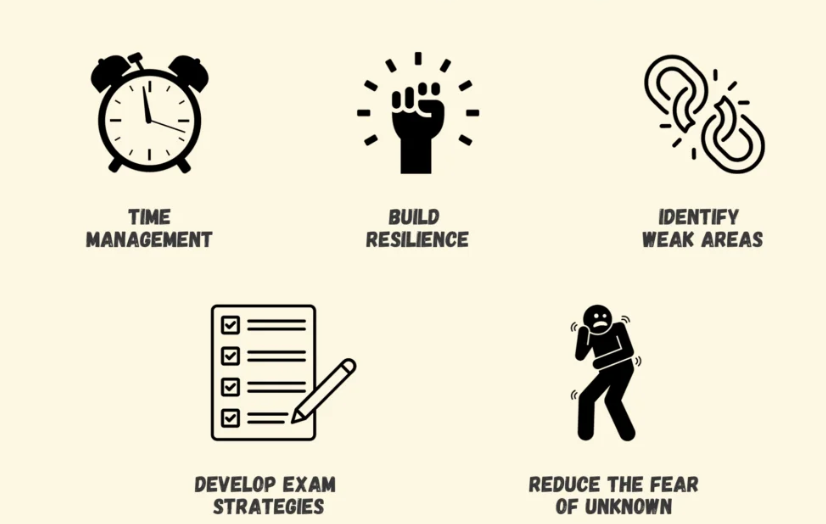
Your brain isn’t designed to concentrate on one thing for hours and hours. Regular breaks are not a sign of laziness they are strategic.
The Pomodoro Technique
Study for 25 minutes with focused effort, then take a five-minute break. Take a longer, 15-30 minute break after four of these cycles. This approach ensures that your mind stays fresh and you don’t get burnt out.
Take a break and leave your study space. Stretch, have a snack, stare out the window or do something unrelated to studying. Avoid scrolling through social media during short breaks, as doing so can make it harder to return to work.
Weekly Rest Days
If you are preparing for a lot of big tests in the weeks ahead, block out at least one day each week when you do not or minimally study. Your brain needs time to store memories and rest. You will return to studies with fresh focus and energy.
Keep Things in Perspective
We also can add undue stress by blowing exams out of proportion.
One Exam Doesn’t Define You
Yes, exams are important but one score doesn’t define your entire future. Successful people faced serious struggles in school. What count more are your attempts, your learning, and your improvement over time.
If you bomb a test, there’s generally another one to make better. There are generally multiple opportunities to prove your knowledge for most subjects. Even if a grade impacts your final average, it’s only part of the learning journey.
Focus on What You Can Control
You control how much you study, how you prepare and when and how you take care of yourself. You don’t determine what exactly questions will be asked, how well other students do, or the whims of the teacher. Direct your energy towards what you are able to influence.
Progress Over Perfection
Strive for your best; not perfection. Perfectionism creates unnecessary pressure. Instead of saying “I need this 100% or I’m a loser,” say “I’ll prepare, and let me show off what I’ve learned.”
Connect With Others
You don’t have to endure exam stress by yourself. Humans are social animals; connection is how we as a species survive adversity.
Study Groups Done Right
Studying with friends can be beneficial if you do it proper. Pick serious and sociable study mates. Have clear objectives for each session. Question each other, talk about confusing topics, and share useful resources.
Don’t hold yourself to a low standard in your group. If you know less about something, that’s an opportunity to learn from someone else — not a sign that you should feel bad.
Talk About Your Feelings
Talk to a parent, sibling, friend, teacher or counselor. Going from not feeling worried to feeling very worried can take just a few minutes. Sometimes, simply talking through your worries can help them seem more manageable. The young person might also provide useful tips or reassurance.
If your stress seems overwhelming or if you’re having symptoms such as a constant state of panic, inability to eat or sleep, thoughts of harming yourself, go to a professional counselor or therapist immediately. Serious anxiety needs professional help.
Exam Day Strategies
Exam day is where the rubber meets the road. These hacks will help you to perform at your peak when it really matters.
Prepare Everything the Night Before
Pack your bag with must haves such as: pens, pencils, eraser, calculator, ID, admission ticket, etc. Choose comfortable clothes. Figure out exactly how you’ll get to the exam location and give yourself extra time in case something gets delayed.
Morning Routine for Success
Wake up a few hours early so that you have time to prepare. Have a good breakfast that includes protein, some complex carbohydrates and some fruit. Flip through your notes lightly if it helps calm you down, but don’t force yourself to learn more. Get some exercise or stretch out to burn off nervous energy.
Get There Early (But Not Too Early)
Arrive to the exam site 10-15 minutes early. Any earlier and you might freak out by hearing other nervous students. Later and you’ll feel rushed. Use that little bit of time for deep breathing and positive visualization.
Read Instructions Carefully
Read all of the instructions before you begin to answer questions. How many do you have to answer? How much are each of the sections worth? What materials can you use? You’ll often be tripped up by a rule you missed.
Start With Easy Questions
Quickly look through the entire exam and begin with questions you know the answer to. This gives you confidence and guarantees you get those points. It helps you relax as you work your way into more difficult questions.
Manage Your Time
Allocate your time in proportion to the point value of each section. If it’s worth 2%, and you’re spending 10 minutes, but a question that’s worth 20% of your grade, you only spend 5 minutes on — then you’re not using your time properly.
If stuck on a question, mark it and move on. And then come back to it later with fresh eyes. Frequently, answering some of the other questions will trigger your memory or offer you hints.
Stay Calm If You Blank Out
If your brain freezes, don’t panic. Close your eyes, take three deep breaths and remind yourself that the information is floating in your brain; now you only need to connect with it. Read the question again slowly. Just start writing about whatever is related to your topic even if it’s only a key word. This often triggers your memory.
After the Exam
Give yourself an emotional spring cleaning once the exam is finished.
Resist the Urge to Overanalyze
Steer clear of the post-exam debriefings in which everyone is comparing answers. This causes stress, and you can’t do anything about it anyway. What’s done is done. If you got something wrong, now you’ve learned that for next time.
Reward Yourself
You put in the time, and you deserve to let loose whether it goes your way or not. Watch a movie, hang out with friends, play video games or eat your favorite meal—do something that makes you happy. Positive reinforcement helps your brain connect hard work with reward.
Reflect and Learn
After you get your results, take a look at your performance in an honest but forgiving way. What study methods worked well? What would you do better next time? View each test as a learning experience that will help you do even better in the future.
Developing Your Individual Stress Management Plan
Everyone is unique, and what works for your friend may not work for you. Try these tactics and see what best helps you. Prepare your own custom plan with:
- Your dream timetable and break structure
- Your favorite stress-relief techniques
- Your optimal study environment
- Best and worst foods to eat before studying
- Folks to lean on for support
Write the plan down and put it up somewhere where you will see it. You’ll now have a strategy that works when you get to finals, instead of trying desperately to figure things out in the heat of the moment.
The Big Picture
Yes, exam stress is a thing but it doesn’t have to be your life. Starting early, staying healthy in mind and body, practicing good study habits, and learning to cope with stress can not only seriously cut back on your anxiety levels but also improve your test performance.
Just remember, the ability to cope with stress is a practice that serves us well long after we leave school. The skills you build now will pay off in job interviews, big presentations, athletic meets and all kinds of challenging situations during your lifetime.
You got this. Thousands of students in the classes before you have all experienced the same stress that you are feeling now, and they survived. You will too. Begin applying these tips now, give yourself time to venture into new territory before you see what works best for you, and believe in the idea that with preparation and attitude, you can conquer test anxiety and forge ahead toward your goals.
Your personal worth is not measured by test scores. You are worth more than grades. But with good self-care and effective preparation, you can demonstrate what you really are capable of learning and achieving. Trust in yourself, implement these tactics and you face your exams head-on full of confidence not dread.
You’ve got this!
Frequently Asked Questions
What if I crumble when the exam begins?
Stop right now and pay attention to your breathing. Inhale and exhale five times slowly, counting as you do so. Put down your pen, close your eyes for a minute, and tell yourself that you’re safe. Ask if you’re allowed to step outside for a minute, or take a bathroom break in order to reset. Return to the exam when you’re more relaxed and refreshed.
How many hours should I study the day before an exam?
A light review of key concepts, formulas and summaries is OK. Do not attempt to learn new material or study hard, it will do more harm than good. Your brain needs some rest ahead of the big day. Concentrate on relaxing, getting everything in order and going to bed early. Trust what you’ve already prepared.
Why do I forget everything after studying?
Yes, it is normal and due to increased stress and adrenaline. The data is not actually gone — it’s simply temporarily unavailable. Employ the blank-out recovery strategies outlined earlier: deep breathing, slowly reading the questions, writing keywords that you think are relevant down and working on easier questions first to build your confidence.
Is pulling an all-nighter before an exam a good idea?
Nope, this is one of the worst things you could do. Memory, concentration and problem-solving are all deeply affected by sleep deprivation. If you haven’t prepared enough, go to bed early and give your best with what you have. You will do so much better if you sleep versus not sleeping.
How do I move on from comparing myself to other classmates?
Keep in mind that everybody has their own strengths, learning styles and situations. Concentrate on your efforts, not on the results of others. Don’t talk about how little or much you studied before an upcoming exam. Unfollow Instagram, Facebook and Twitter accounts that give you FOMO. Compete with yourself, not others.
But what if I have done everything and am still super stressed?
If your exam stress is negatively affecting your every day life — if you’re that anxious that you can’t eat or sleep, or it becomes more of a mental health thing than just nerves — talk to a school counselor, therapist or doctor. And then there’s a point where stress becomes clinical anxiety that requires help from the professionals. It’s nothing to feel ashamed of — in fact, it demonstrates strength and self-awareness to ask for help.
Is it possible that I could rely on stress for motivation?
Yes! Some stress (known as “eustress”) can actually sharpen your focus and help when studying or performing in class. The catch is to keep the buildup at a manageable level. To think of it as the correct amount of pressure to make a diamond — too little and nothing happens, too much and it shatters. Direct your nervous energy toward focused studying, not toward spiraling anxiety.
How do I Handle Disappointed Parents After a Bad Exam? What do I say to my parents after failing a major class test?
Talk to them. Tell them what happened, what you learned and how you plan to grow. All most parents want is to see you are putting in effort to do your best. Demonstrate that you’re taking responsibility and making a plan. Their frustration probably stems from the desire to see you succeed, rather than to watch you suffer.